Sales
Understand Where Your Leads Are Coming From
Learn how to identify your best lead sources, measure what actually works, and turn marketing efforts into predictable sales.
By Bonx team · · Updated · 5 min read
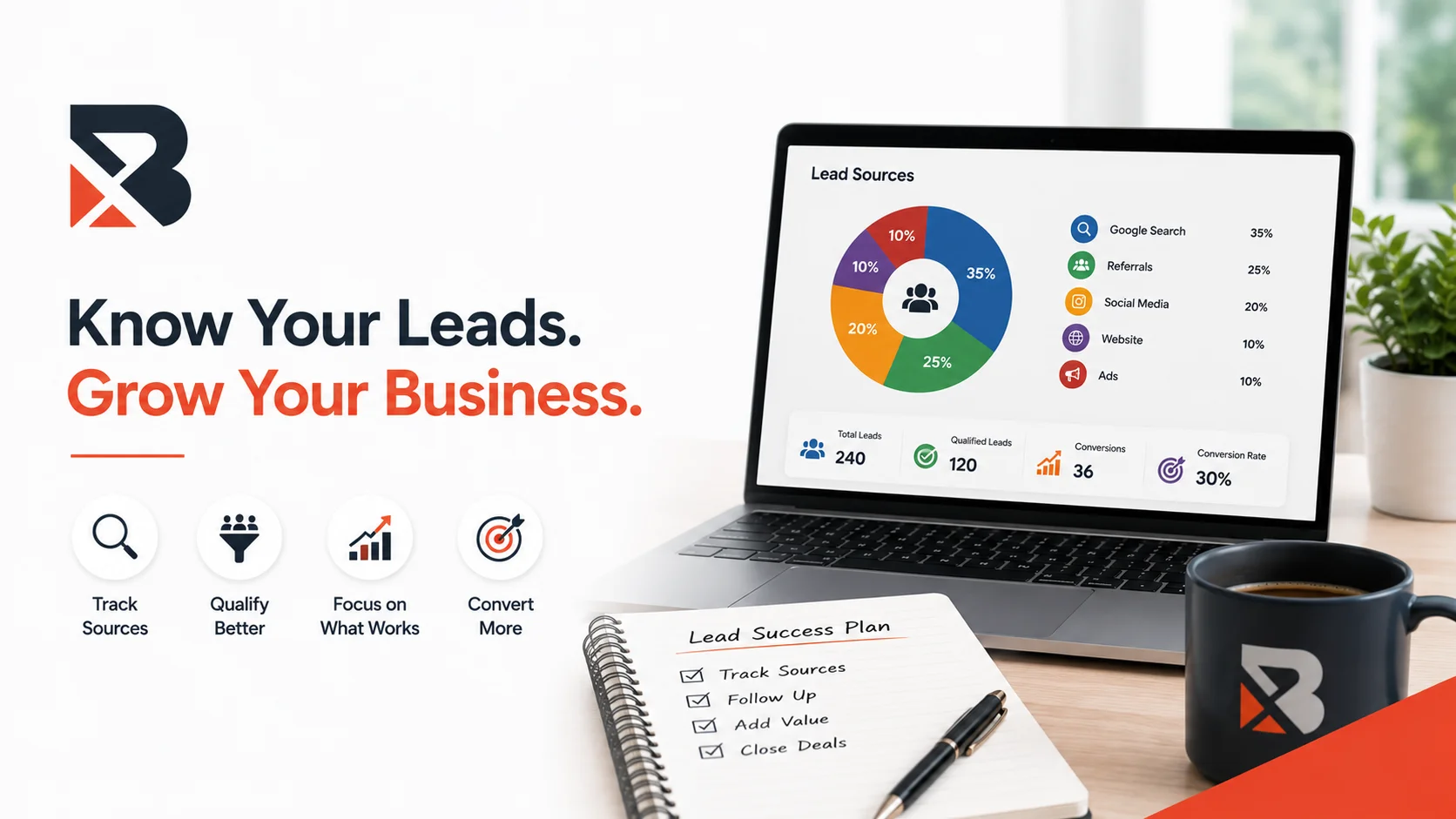
Every growing business wants more customers.
But there is a question that many business owners don't ask often enough:
Where are our customers actually coming from?
A business may receive enquiries through Google, Instagram, referrals, WhatsApp, phone calls, advertisements, its website, or even through people walking into the office. If these sources aren't tracked properly, it becomes difficult to know which marketing activities are actually generating business.
Getting more leads is important, but understanding your leads is even more valuable.
When you know where your best customers come from, you can invest more time and money into the channels that actually work.
1. Identify Every Source That Can Generate Leads
Your customers can discover your business through many different channels.
Common lead sources include:
- Google Search
- Google Business Profile
- Business website
- Instagram and Facebook
- WhatsApp
- Online advertisements
- Customer referrals
- Existing customers
- Local networking
- Direct phone calls
- Walk-in enquiries
- Partnerships
- Trade events
Don't assume that one channel is responsible for most of your customers.
For example, a solar installation company may receive 100 enquiries in a month:
- 30 from Google
- 20 from referrals
- 15 from Instagram
- 15 from website forms
- 10 from advertisements
- 10 from direct enquiries
Without recording the source of every lead, these numbers are almost impossible to understand later.
2. Don't Measure Leads Only by Quantity
Having more leads doesn't necessarily mean having more sales.
Imagine two marketing channels:
**Channel A**
- 100 leads
- 5 customers
**Channel B**
- 30 leads
- 10 customers
Channel A generated more enquiries, but Channel B generated twice as many customers.
This is why businesses should measure **lead quality**, not just lead volume.
Useful metrics include:
- Number of leads
- Qualified leads
- Quotations sent
- Customers won
- Conversion rate
- Average order value
- Cost per lead
- Cost per customer
A smaller number of high-quality leads can be much more valuable than hundreds of low-intent enquiries.
3. Track the Complete Journey From Lead to Customer
Knowing the source of a lead is only the beginning.
You should also understand what happens after the lead enters your business.
A typical sales journey might look like:
Lead → Follow-up → Site Visit → Quotation → Negotiation → Order → Payment
Tracking this journey helps you identify where potential customers are being lost.
For example:
- Google generates many leads but few site visits.
- Referrals generate fewer leads but many quotations.
- Instagram generates enquiries, but customers rarely respond after the first follow-up.
- Website leads may have a higher average order value.
These insights are much more useful than simply knowing how many enquiries you received.
4. Stop Relying on Memory, WhatsApp, or Spreadsheets Alone
As a business grows, lead information often becomes scattered across different places.
One salesperson may have leads in WhatsApp.
Another may keep customer details in Excel.
Someone else may write phone numbers in a notebook.
This creates a serious problem: **your business doesn't have one reliable picture of its sales pipeline.**
Important information can easily be forgotten:
- Where did the lead come from?
- When was the customer contacted?
- What product or service do they need?
- Was a site visit completed?
- Was a quotation sent?
- When should the salesperson follow up?
- Why was the lead lost?
A centralised CRM or business management system can keep this information connected.
When every lead has a source, status, owner, follow-up date, and sales history, your team can make decisions based on actual data instead of assumptions.
5. Use Lead Data to Improve Your Marketing Strategy
Once you consistently track lead sources, your marketing decisions become much easier.
Suppose your data shows:
- Google generates the most qualified leads.
- Referrals have the highest conversion rate.
- Social media generates awareness but fewer sales.
- Paid advertising generates leads at a high cost.
You now have evidence to decide where your marketing budget should go.
You may decide to:
- Invest more in SEO.
- Build a structured referral program.
- Improve your Google Business Profile.
- Create better landing pages.
- Improve social media content.
- Reduce spending on campaigns that don't convert.
The goal isn't to be everywhere.
What Should You Track for Every Lead?
At a minimum, record:
- Customer name
- Contact information
- Lead source
- Date received
- Product or service required
- Assigned salesperson
- Lead status
- Follow-up date
- Quotation status
- Expected value
- Final outcome
- Reason for losing the lead
Over time, this information becomes extremely valuable.
You can compare your sales performance month after month and identify patterns that would otherwise remain hidden.
#Final Thoughts
Growing your business isn't only about generating more leads.
It's about understanding **which leads are valuable, where they come from, and what happens after they enter your sales process.**
When lead sources are properly tracked, business owners can stop making marketing decisions based on assumptions.
Instead, they can see which channels generate enquiries, which channels produce customers, and where the sales process needs improvement.
More leads can increase opportunities. Better lead data helps you turn those opportunities into growth.
Start by tracking every lead source today. After a few months of consistent data, you may discover that your best source of customers isn't the channel you expected.