Finance
How to Prepare Your Business for Tax Season
Stay organized, avoid last-minute stress, and keep your business financially ready for tax filing.
By Bonx team · · Updated · 4 min read
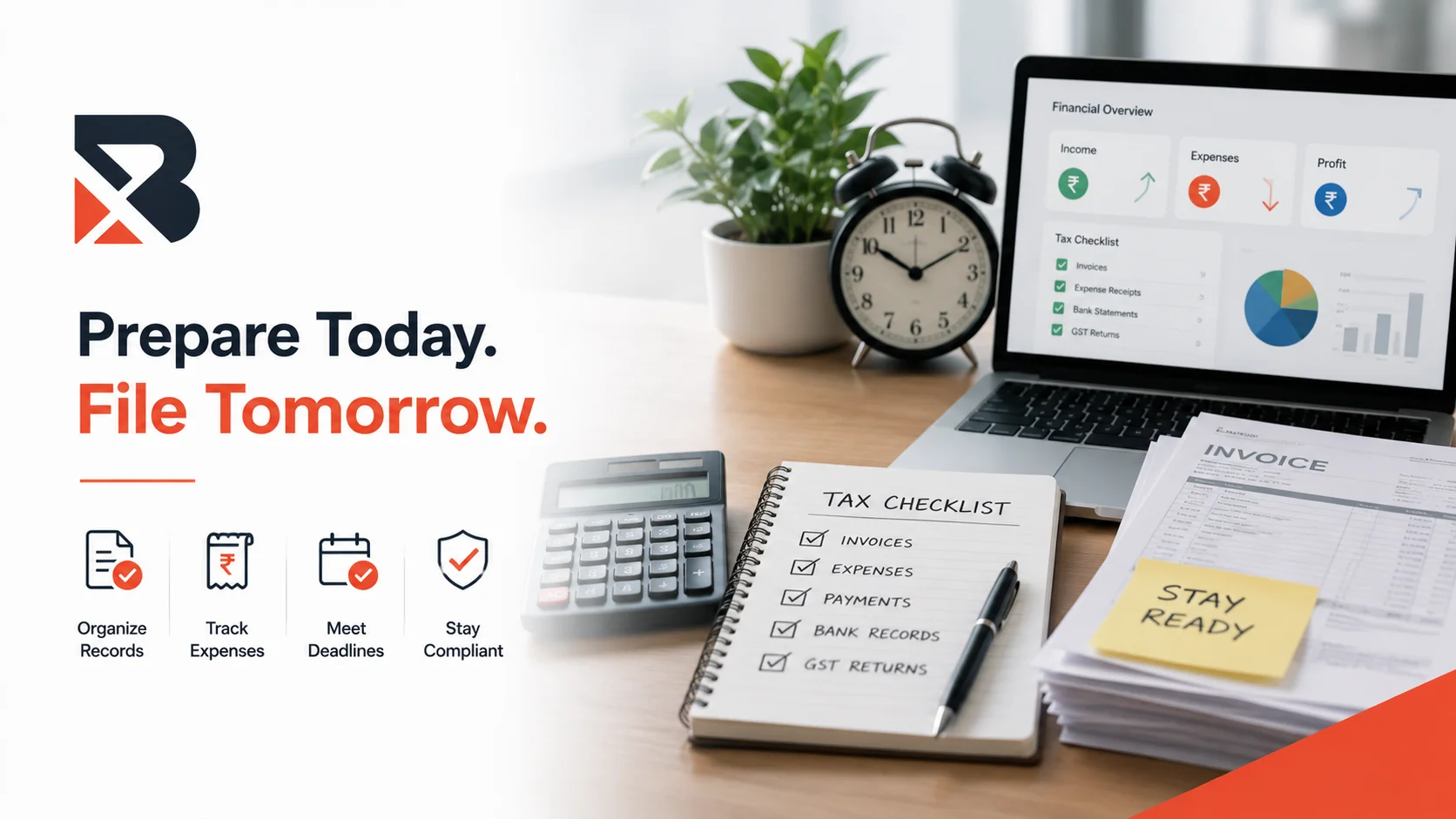
Tax season doesn't have to be stressful.
Many business owners wait until the last minute to organise invoices, calculate expenses, and gather financial records. This often leads to missed deductions, filing errors, unnecessary penalties, and countless hours of frustration.
The good news is that tax preparation isn't something you do once a year. Businesses that maintain accurate records throughout the year find tax filing much faster and more manageable.
Whether you run a service business, installation company, manufacturing unit, or trading business, these five steps will help you prepare for tax season with confidence.
1. Keep Your Financial Records Organised
Good bookkeeping is the foundation of successful tax preparation.
Instead of searching through emails, paper files, or WhatsApp messages at the end of the financial year, maintain organised records from day one.
Important documents include:
- Sales invoices
- Purchase invoices
- Expense receipts
- Bank statements
- Payment records
- Salary records
- Vendor bills
- Business contracts
Keeping everything in one place reduces errors and saves valuable time during tax filing.
2. Track Every Business Expense
Every legitimate business expense should be recorded accurately.
Many small businesses lose money simply because they forget to record expenses throughout the year.
Common business expenses include:
- Office rent
- Internet and phone bills
- Employee salaries
- Vehicle and travel expenses
- Equipment purchases
- Marketing costs
- Software subscriptions
- Utilities
Recording expenses regularly provides a clearer picture of your business finances and simplifies tax calculations.
3. Review Invoices, Payments, and Outstanding Dues
Before tax season arrives, review your financial transactions carefully.
Check that:
- All customer invoices have been issued.
- Payments received are correctly recorded.
- Outstanding customer payments are tracked.
- Supplier payments are up to date.
- Duplicate transactions are removed.
- Missing invoices are identified.
Clean financial records reduce confusion and help ensure accurate reporting.
Regular reconciliation between your bank statements and accounting records is also a good practice.
4. Understand Your Tax Obligations
Every business has different tax responsibilities depending on its size, structure, and location.
Stay informed about:
- Filing deadlines
- Applicable tax regulations
- GST requirements (where applicable)
- Advance tax obligations
- Required financial reports
- Record retention requirements
Tax rules can change over time, so reviewing the latest regulations each financial year helps you stay compliant and avoid unnecessary penalties.
If you're unsure about your obligations, consult a qualified accountant or tax professional before filing.
5. Use Digital Tools to Simplify Tax Preparation
Manual bookkeeping increases the risk of errors and omissions.
Modern business management software makes tax preparation easier by helping businesses:
- Track income and expenses
- Store invoices digitally
- Record customer payments
- Monitor outstanding balances
- Generate financial reports
- Maintain organised transaction history
Having accurate financial data available throughout the year means there's far less work to do when tax season arrives.
Common Tax Preparation Mistakes
Many businesses make avoidable mistakes such as:
- Waiting until the filing deadline to organise records
- Mixing personal and business expenses
- Forgetting to record cash transactions
- Losing receipts and invoices
- Ignoring outstanding customer payments
- Not reviewing financial reports regularly
- Missing important filing deadlines
Avoiding these mistakes saves time, reduces stress, and helps keep your business financially healthy.
Best Practices for Year-Round Tax Readiness
Tax preparation should become part of your monthly business routine.
Follow these habits:
- Update your accounting records every week.
- Review income and expenses every month.
- Store invoices digitally.
- Reconcile bank accounts regularly.
- Keep backup copies of important financial documents.
- Set reminders for tax deadlines.
- Review financial reports before the end of each quarter.
Small habits maintained consistently make tax season much easier.