Operations
The Complete Guide to Managing a Service Business
Learn how to manage customers, teams, projects, and daily operations to build a successful service business
By Bonx team · · Updated · 4 min read
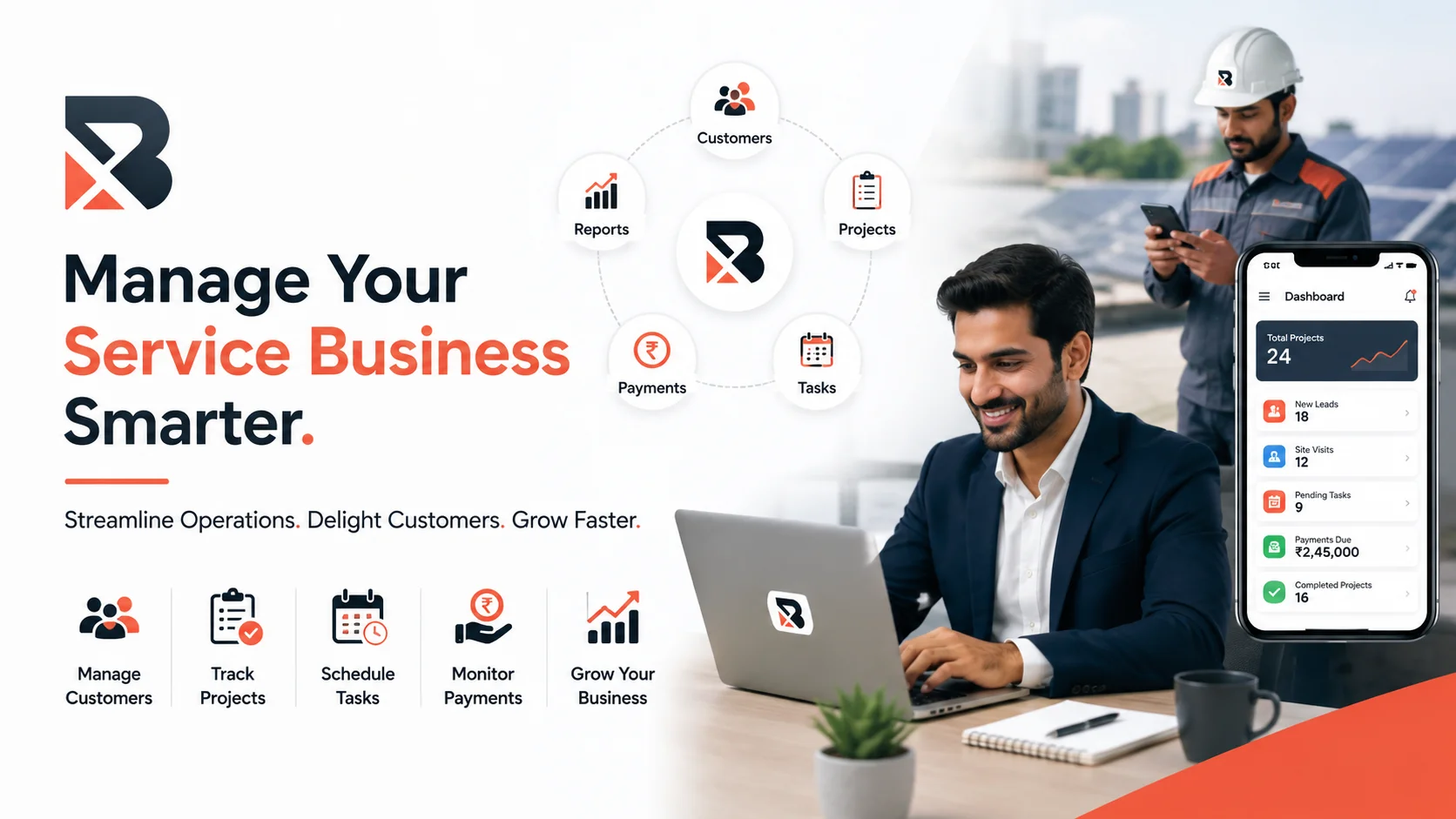
The Complete Guide to Managing a Service Business
Running a service business is about much more than delivering a product or completing a job. Every day involves managing enquiries, assigning work, communicating with customers, scheduling field teams, tracking payments, and ensuring projects are completed on time.
As your business grows, these daily activities become increasingly difficult to manage using spreadsheets, notebooks, phone calls, or messaging apps alone.
Whether you operate a solar installation company, interior design firm, fabrication workshop, EV charging business, security system company, HVAC service, or any project-based business, having a structured way to manage operations is essential for long-term success.
This guide explores the five foundations of a well-managed service business and explains how modern businesses are improving efficiency while delivering a better customer experience.
1. Build a Standard Process for Every Customer
Every successful service business follows a repeatable workflow.
Without clear processes, every employee begins working differently, which often leads to delays, missed follow-ups, inconsistent service, and customer frustration.
A simple workflow might include:
- Customer enquiry
- Qualification call
- Site visit
- Quotation
- Customer approval
- Project planning
- Installation or service
- Payment collection
- Customer feedback
- After-sales support
Standardising these steps makes it easier to train employees, reduce mistakes, and deliver a consistent experience.
2. Keep Your Team Connected and Accountable
Service businesses rely on collaboration between office staff and field teams.
When communication depends only on phone calls or WhatsApp messages, important information can easily be missed.
Instead, ensure every team member has access to:
- Customer information
- Job assignments
- Site visit schedules
- Project updates
- Required documents
- Payment status
- Task progress
Clear communication reduces confusion, prevents duplicate work, and allows projects to move forward more efficiently.
As your business expands to multiple teams or locations, having one shared source of information becomes even more important.
3. Deliver an Outstanding Customer Experience
Customers remember how they were treated just as much as the final result.
A great customer experience comes from clear communication, transparency, and reliability.
Focus on:
- Responding quickly to enquiries
- Providing accurate quotations
- Keeping customers updated throughout the project
- Completing work on schedule whenever possible
- Resolving issues professionally
- Following up after project completion
Happy customers are more likely to recommend your business to friends, family, and colleagues.
In today's competitive market, referrals remain one of the most valuable sources of new business.
4. Track Business Performance Using Real Data
Many business owners make decisions based on instinct.
While experience is valuable, data provides a clearer picture of what's actually happening.
Monitor key performance indicators (KPIs) such as:
- Number of new enquiries
- Lead conversion rate
- Quotation approval rate
- Active projects
- Project completion time
- Outstanding payments
- Customer satisfaction
- Monthly revenue
- Repeat customers
Reviewing these metrics regularly helps you identify opportunities, improve performance, and solve problems before they grow.
Businesses that measure their performance consistently are often better prepared to adapt to changing market conditions.
5. Use Technology to Scale Your Operations
Technology has become one of the biggest competitive advantages for service businesses.
Customers expect faster responses, digital communication, accurate scheduling, and transparent project updates.
Modern business management software helps bring every part of the business together, including:
- Customer relationship management (CRM)
- Lead tracking
- Site visits
- Quotations
- Project management
- Field service operations
- Payment tracking
- Business reporting
Instead of switching between multiple tools, businesses can manage their operations from a single platform, improving visibility and reducing manual work.
Common Challenges Service Businesses Face
Even experienced businesses encounter operational challenges as they grow.
Some of the most common include:
- Missed customer follow-ups
- Poor communication between office and field teams
- Delayed quotations
- Project scheduling conflicts
- Difficulty tracking payments
- Lost documents
- Lack of business visibility
- Manual reporting
Recognising these challenges is the first step toward building a more efficient business.
Best Practices for Long-Term Growth
Sustainable growth comes from improving systems—not just increasing sales.
Consider these best practices:
- Document your business processes.
- Train employees using consistent workflows.
- Review business performance every month.
- Invest in customer relationships.
- Automate repetitive administrative tasks.
- Adopt digital tools that improve collaboration.
- Continuously gather customer feedback.
- Focus on long-term operational efficiency instead of short-term fixes.
Small improvements made consistently can produce significant results over time.