Business Growth
5 Reasons Businesses Lose Customers (And How to Prevent It)
Winning a new customer takes time, effort, and money. But many businesses lose customers because of everyday operational mistakes—not because of pricing or competition.
By Bonx team · · Updated · 3 min read
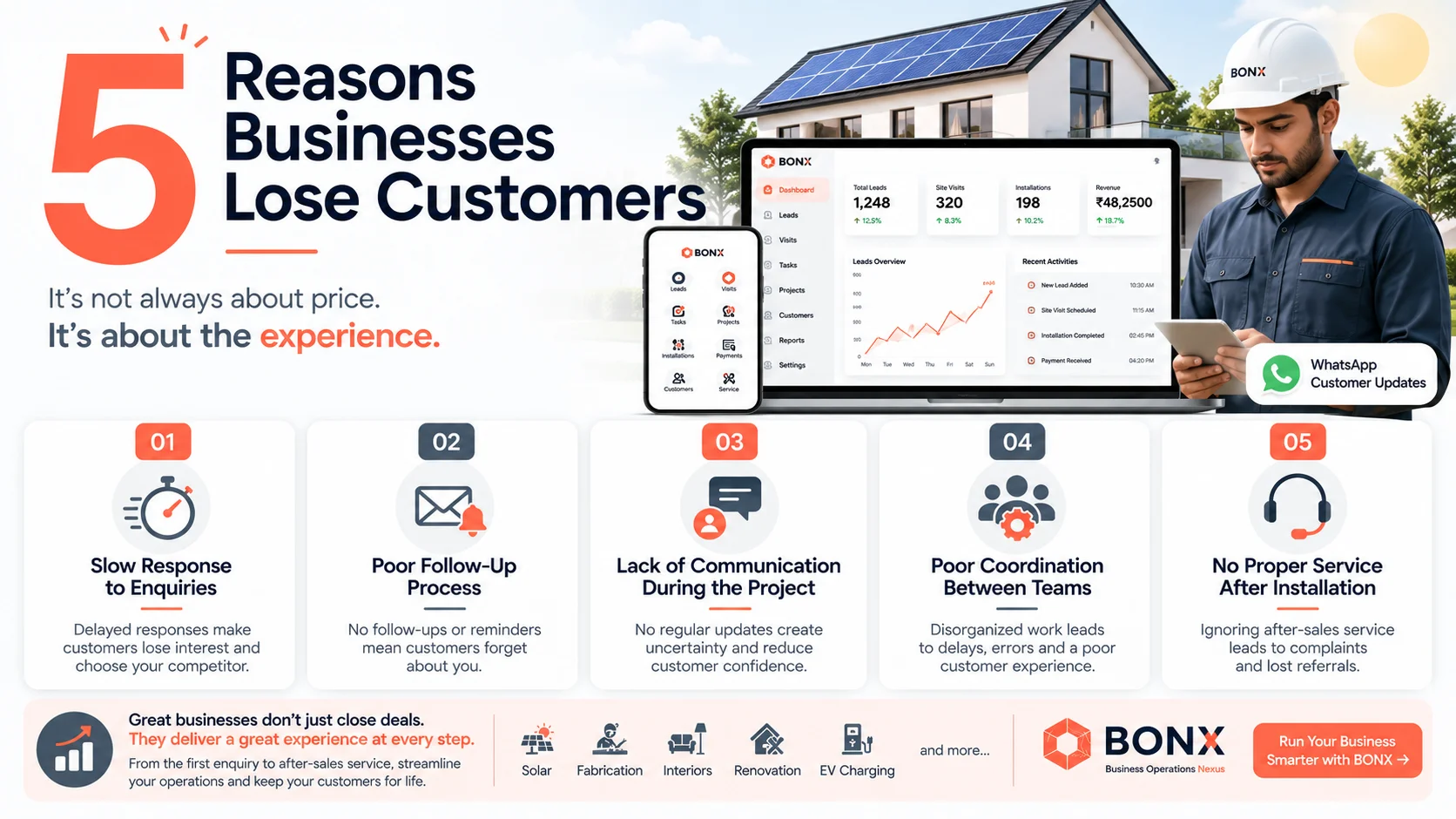
1. Slow Response to Customer Enquiries
Today's customers expect quick responses. If someone contacts your business and doesn't hear back within a few hours, they're likely to contact another company.
Common problems include:
1. Missed phone calls
2. Forgotten WhatsApp messages
3. Delayed quotations
4. No follow-up after an enquiry
How to fix it:
1. Assign every enquiry immediately.
2. Track follow-ups.
3. Send automatic acknowledgement messages.
4. Never let a lead go unanswered.
2. Poor Follow-Up Process
Many businesses lose customers simply because no one follows up.
A customer may request a quotation today but decide next week. Without reminders, your sales team forgets, and the customer chooses someone else.
Signs of poor follow-up:
1. The sales team relies on memory
2. Sticky notes or spreadsheets
3. No reminder system
4. Lost customer history
How to fix it:
1. Schedule follow-up reminders.
2. Record every conversation.
3. Track the status of every lead.
4. Keep the entire sales history in one place.
3. Lack of Communication During the Project
Once the advance payment is received, customers expect regular updates.
Silence creates uncertainty.
Customers often ask:
1. When will installation start?
2. Has production begun?
3. Is today's visit confirmed?
4. When will my project be completed?
Without updates, customers lose confidence.
How to fix it:
Keep customers informed throughout the journey.
Share updates for:
1. Site visit scheduled
2. Quotation approved
3. Production started
4. Installation scheduled
5. Work completed
6. Service request received
Simple communication builds trust.
4. Poor Coordination Between Office and Field Teams
Many businesses struggle because office staff and field employees work separately.
Typical issues include:
1. Wrong customer address
2. Missed site visits
3. Engineers arriving without the required materials
4. Installation delays
5. Duplicate work
This results in unhappy customers and unnecessary costs.
How to fix it
Ensure everyone works from the same information.
Your office team, sales team, installers, and service technicians should always know:
1. Customer details
2. Site location
3. Assigned tasks
4. Visit schedule
5. Project status
Better coordination means faster service and fewer mistakes.
5. No Proper Service After Installation
The customer relationship doesn't end after installation.
Many businesses miss opportunities because they don't manage:
1. Warranty service
2. Maintenance visits
3. Annual inspections
4. Customer complaints
5. Repeat business
Satisfied customers often become your best source of referrals.
How to fix it
Create a structured after-sales process.
Track:
1. Warranty period
2. Service requests
3. Maintenance schedules
4. Customer feedback
5. Repeat sales opportunities
Excellent service creates long-term customers.